Black Sheep Inn History
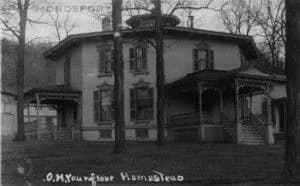
The Inn's History
Black Sheep Inn is housed in an unusual style of architecture known as the “Octagon Mode,” and it is listed on the National Register of Historic Places as the T.M. Younglove Octagon House. The T.M. Younglove Octagon House, constructed in this intriguing manner, is a two-story, Italianate stucco-covered stone building consisting of the main octagon shape, constructed in 1859, and two, rectangular wings added to the North and East faces of the eight-sided structure in 1882. The entire dwelling is comprised of stone masonry with stucco applied to all of the exterior walls.
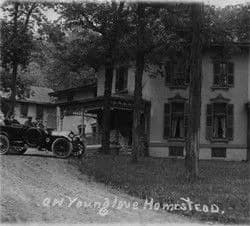
The Younglove Family Legacy
Arriving in Pleasant Valley in June of 1807, the Cornelius Younglove family was one of the first families to establish a permanent home in this area. In fact, some of the land originally developed by the Youngloves is still held today by the family’s descendants. As Orson Fowler’s A Home For All encouraged, T.M. Younglove, (Cornelius’ son), was directly responsible for the construction of his octagon house in 1859, and he personally attended to many of the menial tasks necessary to complete the project.